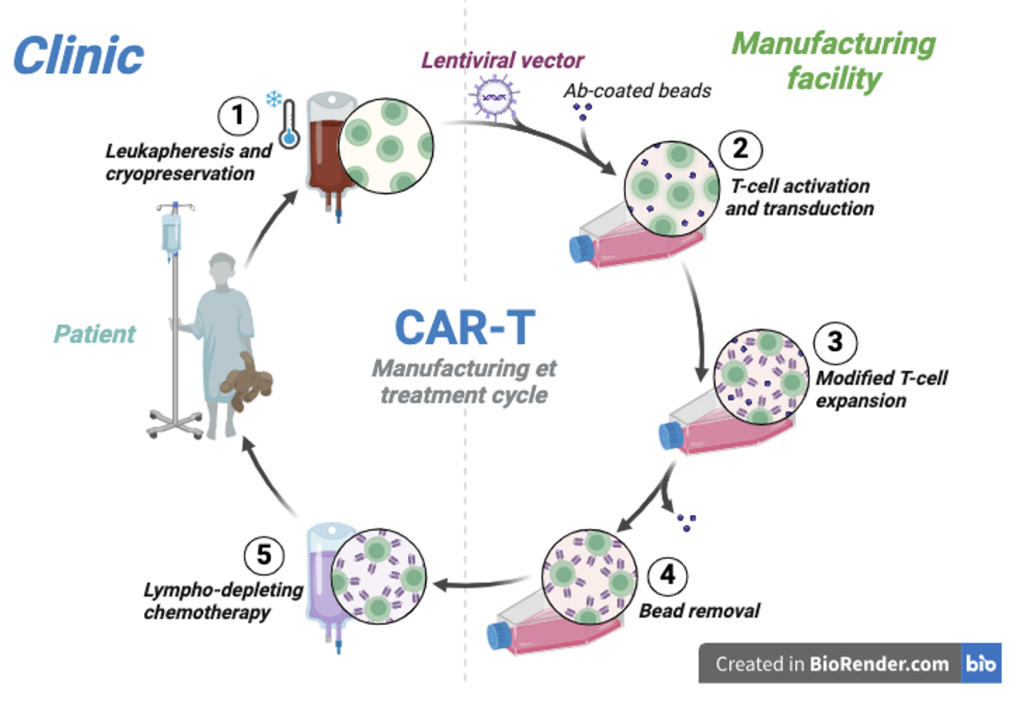
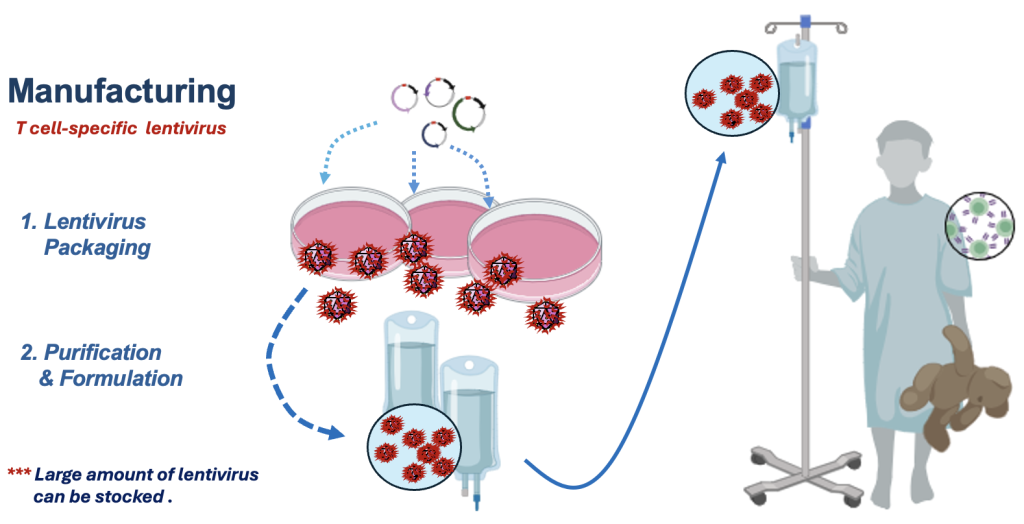
Chimeric antigen receptor (CAR)-T cell therapies have treated more than 30,000 patients since its first FDA approval in 2017 and are indeed life saving: complete remission up to a decade or more have been observed. CAR-T therapies have also demonstrated great promise in treating notorious auto-immune disease as systemic lupus erythematous(SLE) etc in recent clinical trials. However, the high costs, up to $ 1 million or more per treatment, limit many desperate patients from their access. As can be seen (below, left), the multi-step and sophisticated manufacturing of CAR-T cells performed outside the body is the major driver of the high cost of conventional CAR-T therapy. Alternatively, direct intravenous injection of CAR-expressing lentivirus that infect only T cells, leading to generation of CAR-T cell within the body (below, right) can largely simplify the overall procedure. Consequently, it can offer a promising solution to overcome the obstacles in current CAR-T therapies.
Conventional CAR-T therapy
Manufacturing of CAR-T cells is complex and costly. A major cause, however, is the need to obtain a pure population of T cells first so that CAR-expressing lentivirus can transduce them to form functional CAR-T cells – all happensoutside the body, as lentivirus used in current CAR-T manufacturing infects not only T cells but other cells as well
In Vivo CAR-T generation
Instead, off-the-shelf CAR-expressing lentiviruses are engineered to infect T lymphocytes only. Upon direct intravenous injection, such lentiviruses will infect T cells selectively to express CAR – forming CAR-T cellswithin the body. In this way, affordable CAR-T therapies can be achieved for more patients in a timely manner.
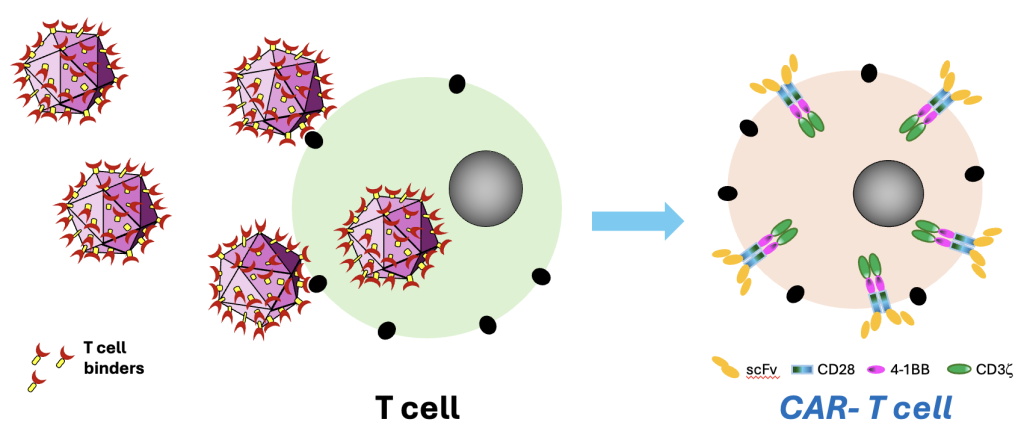
Mechnism of actions
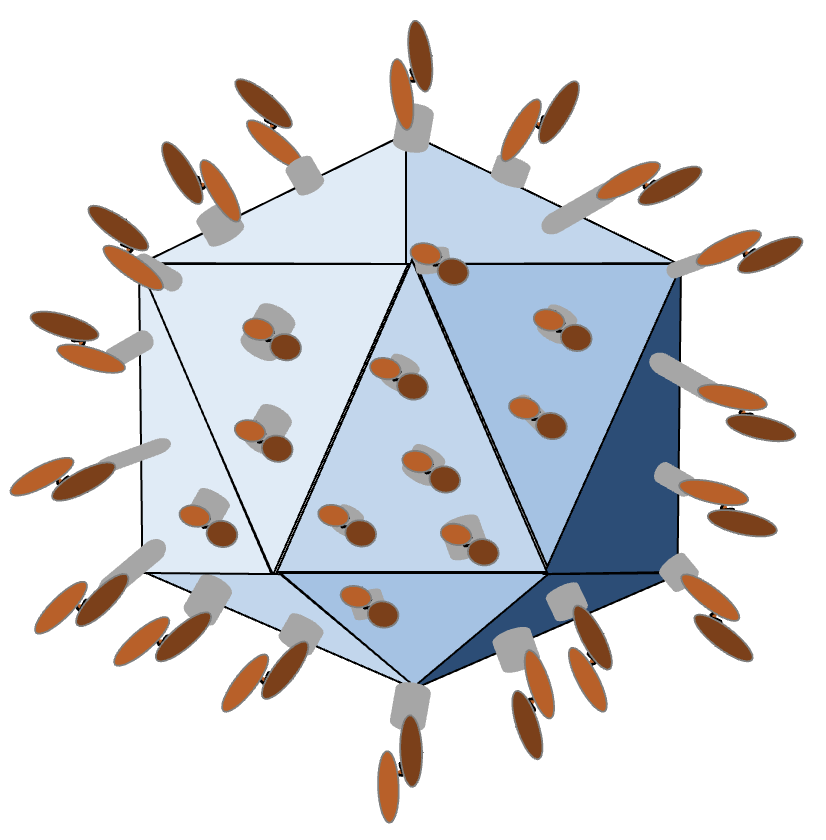
Lentiviruses recognize and infect cells through the envelope proteins, which are engineered to infect T lymphocytes only via T cell binders integrated/coupled. CAR-expressing lentiviruses are packaged with such envelop proteins. Upon direct intravenous injection of the lentiviruses, T cell binders on envelop proteins will mediate the virus to bind to and infect of T cells selectively in blood circulation, generating CAR-T cells in vivo.
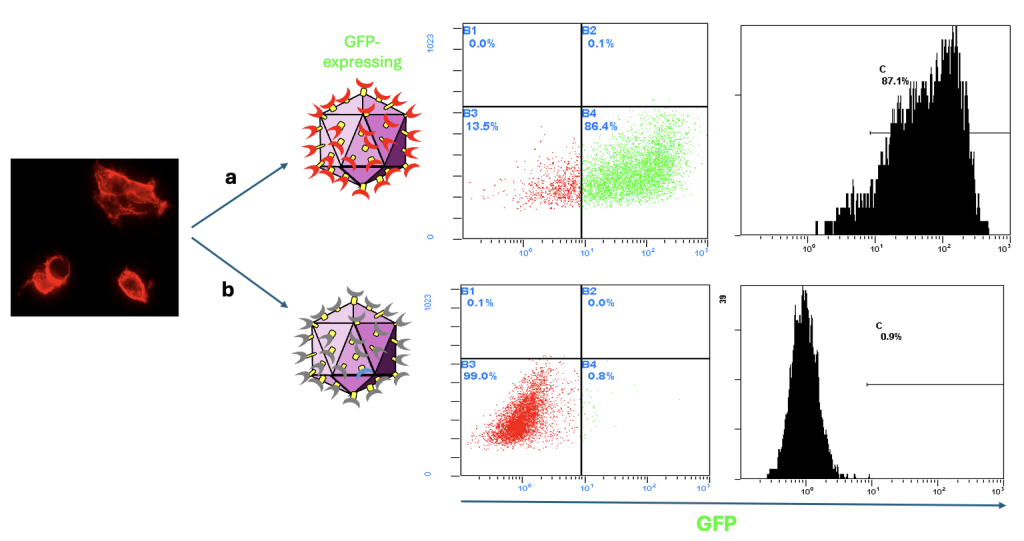
Proof of principles
a. Cells expressing a certain surface antigen can be infected selectively by lentiviruses recogizing the antigen in vitro
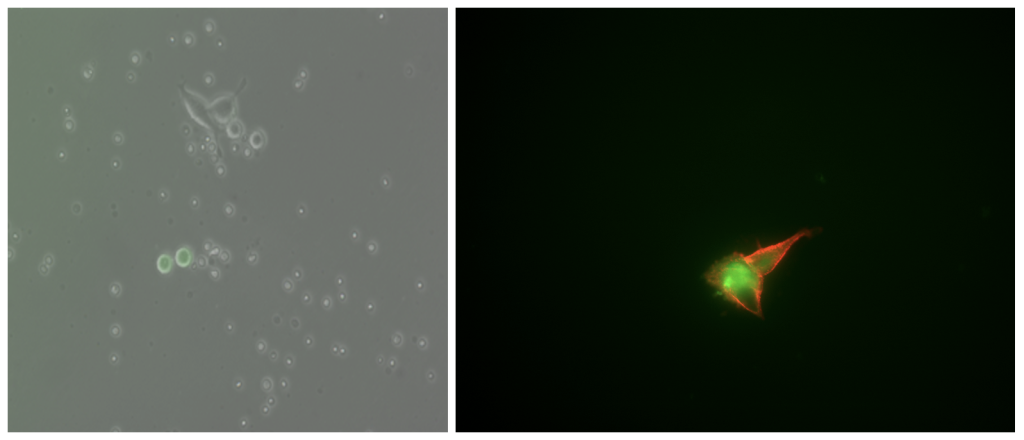
GFP-expressing lentiviruses were packaged with envelop proteins recognizing a certain cell surface antigen. Upon exposure of the lentiviruses to cells expressing such antigen in cell cultures in vitro, lentivirus infect the cells and mediated the expression of GFP(a) but lentivirus recognizing other antigens failed to do so (b).
b. Lentivirus recogizing a certain cell surface antigen infect these cells selectively in vivo
Following cells expressing a certain surface antigen were injected into mouse blood circulation, the GFP expressing-lentiviruses recognizing the antigen were injected subsequently. Days later, few cells expressing GFP and selected antigen were observed in mouse blood samples collected , indicating in vivo infection of cells – of – interest.
Our primary focus:
I. Universal CAR-expressing Lentivirus
Initially, special adaptors are integrated into envelope proteins of lentivirus – such adaptors are capable of forming the strongest complex with T cell binders of choice. Once coupled with a selected T cell binders, the lentiviruses are readily to infect T cells selectively.
II. Ready-to-use CAR-expressing lentivirus
a. Protein-based: T cell-specific antibodies or ligands are integrated into envelop protein of lentivirus for selective T cell infection.
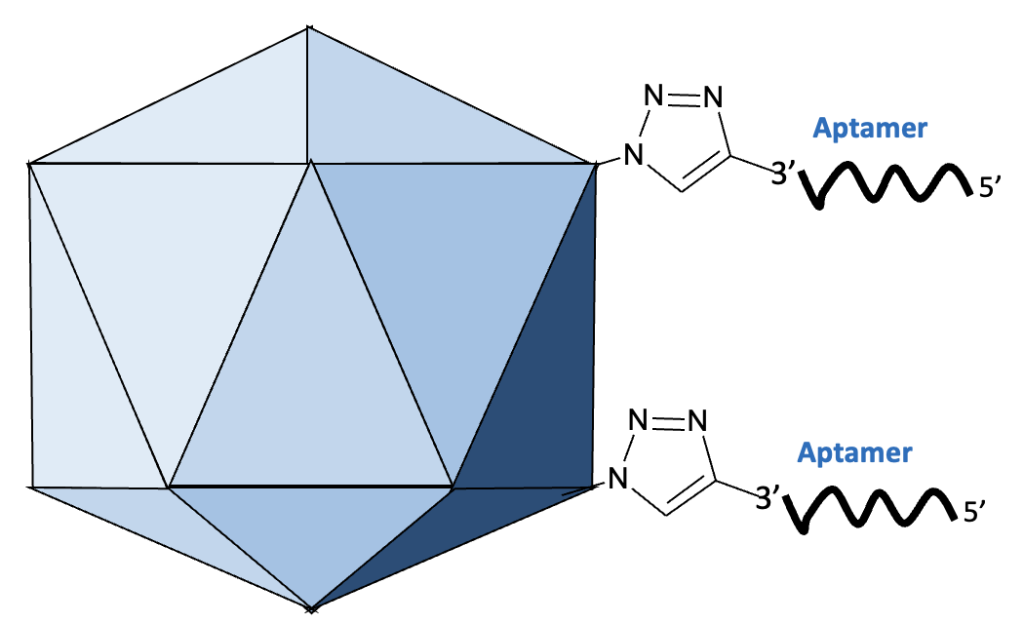
b. Nucleic acid-based: T cell-specific aptamers are conjugated to envelop protein of lentivirus for selective T cell infection.
Talk to us
The cost of life-saving CAR-T therapies can climb up to $1 million. However, successful implementation of in vivoCAR-expressing lentivirus strategy can make the therapy affordable for many. Need to know more: